Free Stack of Books Clipart Vector
As a designer who spends more time staring at stitch charts than sleeping, I have learned to be skeptical of "free" anything. In the world of digital assets, free often means low resolution, messy vectors, or designs that fall apart under the needle. However, when I pulled up Free Stack of Books Clipart Vector, I didn’t just see a cute image; I saw a potential bestseller for my own small shop and a solid candidate for client work. This is not just another clipart drop; it is a functional design asset that requires real evaluation before it hits the hoop.
I approached this review with the mindset of an embroidery product reviewer. My goal was to determine if this design holds up in a real-world scenario. Would it look professional on a custom embroidered tote bag? Could it serve as the centerpiece of a boutique sweatshirt collection? Or would it get lost in the fabric texture? Here is my practical breakdown of how this design performs from concept to finished product.
The First Impression: Mood and Visual Personality
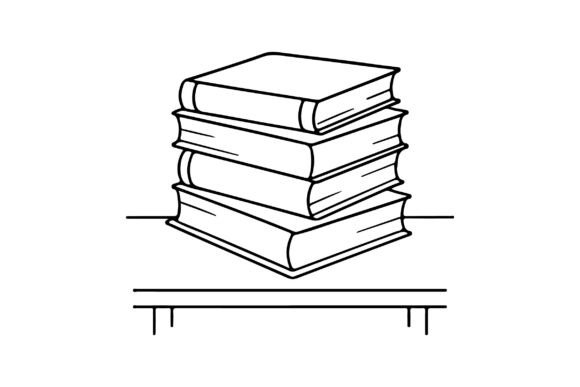
Before we talk about thread tension, let’s talk about the vibe. A stack of books immediately signals knowledge, relaxation, storytelling, and cozy aesthetics. When I looked at the vector file, the lines were clean and the composition felt balanced. It doesn’t scream for attention; it invites the viewer in. This makes it incredibly versatile for specific niches.
The visual personality here is warm and inviting. It feels like a quiet Sunday morning with a cup of tea. For embroidery designers, this mood translates well into products that promise comfort or intellectual curiosity. Whether you are targeting students, avid readers, or teachers, the theme resonates emotionally. The layout suggests a vertical orientation, which naturally fits well on the chest area of a sweatshirt or the center of a tote bag. It has a classic feel that won’t look outdated in six months, which is crucial for long-term inventory planning.
Real-Life Application: From Digital File to Finished Product
Let’s imagine a concrete scenario. You are preparing for the back-to-school season or perhaps a holiday gift run for book lovers. You decide to create a line of personalized gifts using Free Stack of Books Clipart Vector. You print out mockups to visualize how the design will look on different substrates.
Tote Bags and Canvas Totes
This is perhaps the most natural home for this design. A canvas tote is a blank canvas waiting for a statement. When I simulated stitching this onto a heavy cotton canvas, the stacked books provided a strong focal point. It works beautifully as a central graphic, perhaps accompanied by minimal text like "Read More" or "Bookworm." The design’s clarity ensures that even after years of use and washing, the core image remains recognizable. For an Etsy seller, this is a high-demand item, and having a unique, high-quality vector gives you an edge over sellers using generic, pixelated images.
Sweatshirts and Custom Apparel
Moving to apparel, the design shines in the context of cozy winter wear. Embroidered sweatshirts are trending, and a subtle stack of books offers a sophisticated alternative to loud logos. On a cream or oatmeal-colored hoodie, light grey or navy threads can bring out the details without overwhelming the garment. It appeals to the "quiet luxury" aesthetic that many modern consumers prefer. It feels personal, like a badge of identity for someone who values literature.
Baby Items and Nursery Decor
There is also a surprising application here. For new parents who are educators or librarians, a soft embroidered stack of books on a baby blanket or muslin cloth adds a sentimental touch. It suggests a future filled with learning. The rounded edges of the book shapes (assuming standard vector smoothing) work well for baby-safe products, avoiding any sharp corners that might catch on delicate skin.
Where Caution Is Required
Not every surface is created equal, and Free Stack of Books Clipart Vector has its limitations. As an experienced designer, I must advise against using this design on highly textured fabrics like heavy bouclé or thick chenille. The fine details of the book spines could get lost in the nap of the fabric, resulting in a muddy, unclear image. Similarly, stretchy knits require careful stabilization; if the hoop distorts the fabric during stitching, the symmetry of the stack might warp, making the books look uneven.
Small hoop sizes are another challenge. If you attempt to digitize this for a tiny 4x4 inch hoop, you risk losing the distinction between individual books. The detail level needs enough space to breathe. On curved surfaces like baseball caps, the curvature can distort the perspective of the stack unless the design is carefully adjusted. Always test these variations before committing to a full production run.
Technical Considerations for Embroidery Designers
Using a vector file is only step one. To turn this into a successful machine embroidery design, several technical factors come into play. Stitch density is critical. If the fill stitches are too dense, the fabric will pucker, especially on lighter materials like tea towels or thin cottons. Conversely, if the density is too low, the underlying fabric might show through, ruining the crispness of the book covers.
Thread color selection can make or break this design. A monochromatic scheme using varying shades of blue or green can create depth, while a multi-color approach allows for vibrant, distinct book spines. I recommend testing your chosen thread colors on scrap fabric first. Check the contrast against the background material. What looks good on a screen might wash out on white fabric or disappear on black fabric.
Stabilizer choice is equally important. For stable fabrics like denim or canvas, cut-away stabilizer provides the necessary support for long-term durability. For temporary projects like holiday gifts made on lightweight jersey, tear-away might suffice, but you must ensure there is no visible residue left behind.
Commercial Use and Licensing
For those of us running craft businesses, the license terms are paramount. While the product is listed under Freebies, you must verify whether the Free Stack of Books Clipart Vector allows for commercial use on finished goods. Some free vectors are for personal use only. If you plan to sell embroidered patches, tote bags, or digital mockups featuring this design, confirm the licensing agreement. Assuming it is commercially viable, this asset can significantly boost your profit margins since your primary cost is thread and fabric, not expensive design licenses.
Final Verdict: A Practical Asset for Creative Entrepreneurs
In conclusion, Free Stack of Books Clipart Vector is more than just a pretty picture. It is a well-composed design that aligns perfectly with current trends in handmade merchandise and personalized gifts. Its versatility across categories—from tote bags and sweatshirts to baby items and nursery decor—makes it a valuable addition to any designer’s library.
It performs best when used on stable, medium-weight fabrics where the details can be clearly rendered. By paying attention to stitch density, thread contrast, and proper stabilization, you can transform this digital file into a professional-grade finished product that customers will love. For Etsy sellers, small shop owners, and creative entrepreneurs, this is a low-risk, high-reward asset that can help elevate your brand presentation and engage buyers looking for meaningful, aesthetically pleasing items.
My advice? Download it, test it on your favorite fabric scraps, and start creating. Whether you are designing a single personalized gift for a friend or launching a new line of boutique accessories, this design offers the foundation for something truly special. Just remember to check the specific file details and licensing before you hit print or send it to the embroiderer.